
A Deep Dive into Coffee Shop Franchises: Kiosk vs. Cafe vs. Mobile
The aroma of freshly brewed coffee has become the Philippines’ unofficial urban perfume. Once a simple morning ritual, coffee has transformed into an all-day affair, a social lubricant, and a cultural staple. This seismic shift has supercharged the nation’s coffee industry, turning it into a vibrant and highly competitive arena. For aspiring entrepreneurs, the franchise model offers a tantalizing key to this kingdom, a chance to leverage a proven brand and operating system. The investment can range from an accessible ₱100,000 to a more substantial ₱1.5 million or more, depending on the brand and format.
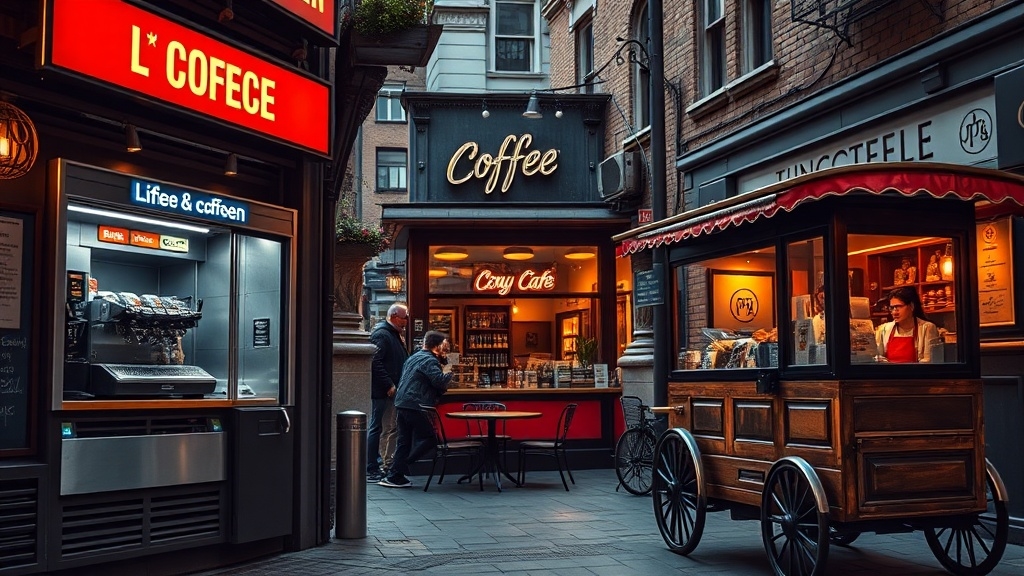
But entering the coffee game isn’t a one-size-fits-all proposition. The modern coffee franchise landscape has fractured into distinct models, each with its own DNA, financial footprint, and operational rhythm. The three dominant players are the lean coffee kiosk, the traditional full-service cafe, and the agile mobile coffee cart.
Choosing between them is the first, and perhaps most critical, decision a franchisee will make. It’s a choice that goes beyond mere budget; it dictates your target market, your daily operations, and your pathway to profitability. This deep dive will dissect these three models, exploring the strategic advantages, financial realities, and operational demands of each within the unique context of the Philippine market. Understanding these differences is the first step in turning a passion for coffee into a successful business venture.
Model 1: The Coffee Kiosk – The High-Traffic Specialist
The coffee kiosk is the industry’s sprinter. It’s a model built for speed, efficiency, and volume, strategically placed in the arteries of Filipino commerce: bustling mall corridors, the lobbies of corporate towers, and busy transport terminals. Its philosophy is simple: serve great coffee, fast, to people on the move. With a small footprint, often just a few square meters, the kiosk forgoes the seating and leisurely ambiance of a cafe in favor of a laser focus on the grab-and-go customer.
The Investment and Returns
This is arguably the most accessible entry point into coffee franchising. The appeal of the kiosk lies in its relatively low barrier to entry. Franchise packages for deluxe carts or kiosks often start at around ₱490,000. This figure typically includes the physical cart, essential equipment like an espresso machine and grinder, initial supplies, and crucial training.
The financial upside is compelling. Lower startup costs are matched by leaner operational expenses. With no need for a large customer area, rent is significantly lower, and staffing needs are minimal—often just one or two baristas per shift. This lean structure can lead to a surprisingly quick return on investment. With a prime location and consistent foot traffic, some kiosk franchisees report breaking even in as little as six to twelve months.
Pros and Cons
The kiosk model’s strengths are clear:
- Low Capital Requirement: It’s the most budget-friendly way to own a coffee franchise, making it ideal for first-time entrepreneurs.
- High-Volume Potential: Locations are chosen specifically for massive footfall, ensuring a steady stream of potential customers.
- Simplified Operations: A limited menu and focus on takeaway orders streamline everything from inventory to service.
However, the model has its limitations:
- Limited Menu: The small space restricts the variety of drinks and food you can offer.
- No "Third Place" Appeal: You miss out on the market of customers looking for a place to work, meet, or relax. This also limits the average revenue per customer.
- Intense Location Dependency: Success is almost entirely dependent on securing a high-traffic location, where competition can be fierce.
The kiosk franchisee is an operator who values efficiency and volume over ambiance. They are sharp, fast-moving, and understand that in this model, location is everything. The key is to identify emerging franchise trends to capture the market effectively.
Model 2: The Full-Service Cafe – The Community Anchor
If the kiosk is a sprinter, the full-service cafe is a marathon runner. This is the traditional coffee shop experience, a destination designed to be a "third place"—a home away from home and work. It’s built on creating an inviting atmosphere with comfortable seating, reliable Wi-Fi, and a distinctive aesthetic that reflects the brand. The business model here is not just about selling coffee; it's about selling an experience.
The rise of a new generation of consumers, particularly Gen Z and millennials, has fueled the demand for these spaces. They see cafes as social hubs for studying, remote work, and catching up with friends, making the ambiance as important as the coffee itself.
The Investment and Returns
Building a community anchor requires a significantly larger investment. The costs move beyond a simple package fee into the realm of major construction and design. Franchise fees for a fit-out or full store can start around ₱495,000, but this figure does not include the substantial construction costs, which are borne by the franchisee. For well-established, premium brands, the all-in investment can easily run into several million pesos.
The operational costs are also much higher, encompassing hefty rental fees for a larger space, higher utility bills, and a larger, more skilled staff, including baristas, cashiers, and kitchen crew. However, the revenue potential is also greater. A broader menu, including pastries, sandwiches, and full meals, dramatically increases the average ticket size. Customers stay longer and spend more. The cafe becomes a neighborhood fixture, building a loyal customer base that provides a steady, reliable income stream. Exploring top food franchise sectors can provide context for how cafes fit into the broader F&B landscape.
Pros and Cons
The strengths of the cafe model are tied to its scale and purpose:
- Multiple Revenue Streams: Sales come from beverages, food, merchandise, and sometimes even hosting small events.
- Strong Brand Loyalty: A physical cafe with a great atmosphere builds deep community roots and customer loyalty.
- Higher Profit Per Customer: The "dwell time" directly correlates with higher spending.
The challenges are equally significant:
- High Initial Investment: The substantial capital required is the single biggest hurdle.
- Complex Management: Overseeing a larger staff, a full kitchen, and customer service in a dynamic environment is demanding.
- High Fixed Costs: High rent and utilities mean a greater financial risk if the business is slow to take off.
The ideal cafe franchisee is often an experienced business person with significant capital and a passion for hospitality. They are community builders who understand that their success depends on creating a space where people want to be.
Model 3: The Mobile Coffee Cart – The Flexible Nomad
The mobile coffee cart is the industry's guerrilla marketer. It’s the ultimate expression of flexibility, untethered from a fixed address and free to chase customers wherever they congregate. This model thrives on agility, setting up shop at weekend markets, food parks, concerts, corporate events, and private functions. It’s a business on wheels that can adapt to seasonal demand and capitalize on an ever-changing calendar of events.
The Investment and Returns
The investment for a mobile cart is often in the same ballpark as a kiosk. Business packages for pop-up or mobile concepts can be found, offering a low-cost entry into the market. The primary advantage is the elimination of the biggest fixed cost in the business: rent.
Profitability in the mobile model is event-driven and can be less consistent than a fixed location. A successful weekend at a major music festival could generate more revenue than a kiosk makes in a month. Conversely, a rainy week with no events can mean zero income. Success hinges on the owner’s ability to network, book events, and market their presence effectively. The cart itself becomes a moving billboard, generating buzz wherever it goes. The operational costs are mainly for fuel, event participation fees, and supplies. The model offers high profit margins per cup, but overall revenue is tied to the operator's hustle.
Pros and Cons
The mobile cart's biggest asset is its freedom:
- Ultimate Flexibility: Go where the crowds are, test different markets, and adapt to any opportunity.
- Extremely Low Overhead: No rent and minimal utility costs dramatically lower the financial risk.
- High-Profit Events: The ability to tap into large-scale events offers massive, albeit temporary, revenue spikes.
The nomadic lifestyle also presents unique challenges:
- Logistical Complexity: Managing permits for different LGUs, transportation, and setup/teardown is a daily challenge.
- Inconsistent Revenue: Income can be unpredictable and heavily reliant on weather and the events calendar.
- Limited Brand Presence: Building a consistent customer base is harder when your location is always changing.
The mobile cart franchisee is a natural-born entrepreneur—a hands-on, energetic individual who thrives on variety and is skilled at sales and networking. They aren't afraid of the logistical legwork and see opportunity in every new location. The impact of economic cycles on franchising can be mitigated by this model's ability to pivot to where spending is happening.
Making the Right Choice: A Head-to-Head Comparison
Choosing the right coffee franchise model requires a careful balancing act of capital, risk, and operational style. The coffee kiosk stands out for its low initial investment and operating costs, making it a prime choice for those prioritizing a quick potential return on investment. Its management focus is squarely on speed, efficiency, and serving a high volume of on-the-go customers in a fixed, high-traffic location.
In contrast, the full-service cafe demands a much higher initial investment and carries significant ongoing operating costs. Its path to profitability is slower, built on long-term community anchoring. Success here is measured by creating an appealing ambiance and customer experience, which encourages patrons to stay longer and spend more on a complex menu of food and drinks. The management style is centered on hospitality and experience creation.
The mobile coffee cart offers a middle ground in terms of investment but boasts the lowest operating costs by eliminating rent. Its location strategy is nomadic and event-driven, targeting specific crowds rather than general foot traffic. The management focus is on logistics, sales, and networking to secure profitable events. While its revenue can be inconsistent, the flexibility and low overhead present a unique appeal for the hands-on, agile entrepreneur.
The Unavoidable Groundwork: Legal and Due Diligence
Regardless of the model you choose, entering the Philippine franchise market requires navigating a specific set of legal and regulatory hurdles. This isn't just paperwork; it's the foundation of your business. You'll need to decide on a business structure—sole proprietorship, partnership, or corporation—and then secure the necessary registrations from either the Department of Trade and Industry (DTI) or the Securities and Exchange Commission (SEC).
Following this, you must obtain a Barangay Clearance and, finally, the Mayor's Permit (or Business Permit) from the city or municipality where you operate. This process ensures your coffee shop is legally registered and compliant with local ordinances. It's a critical step that protects both you and your customers. A deep understanding of Philippine franchise laws and regulations is non-negotiable for long-term success.
Ultimately, choosing between a kiosk, a cafe, or a mobile cart is a personal and strategic decision. There is no single "best" option—only the option that is best for you. It requires an honest assessment of your capital, your tolerance for risk, your management style, and your ultimate vision. By carefully weighing these factors and committing to thorough due diligence, you can select the model that best positions you to thrive in the Philippines' exhilarating coffee culture, transforming your entrepreneurial dream into a tangible, aromatic reality. The fusion of health and wealth trends shows that investing in a beloved daily ritual like coffee can be a path to both.
