
The Future of "Experiential" Franchising in the Philippines
For decades, the formula for franchise success in the Philippines seemed straightforward: find a good location, sell a popular product, and replicate. The landscape was a sea of transactional efficiency—fast-food counters, cookie-cutter retail stores, and service kiosks designed for speed and volume. Profitability was a numbers game, a direct function of foot traffic and sales per square meter. But a quiet, seismic shift, accelerated by a global pandemic that starved a nation of connection, has radically redefined that formula. The era of the purely transactional franchise is fading. In its place, a powerful new contender is emerging: experiential franchising.
This isn't merely a fleeting trend or a marketing buzzword. It's a fundamental reimagining of commercial exchange, driven by a Filipino consumer base that now demands more than just a product or a service; they crave an experience. Recent industry analysis underscores this upheaval, showing that experience-based franchises became the fastest-expanding segment in the Philippine market last year, posting a staggering 34% growth. The message is clear: the future of franchising is not just about what you sell, but the world you build around it. And for entrepreneurs and investors, understanding this evolution is no longer optional—it's critical for survival and success.
From Transaction to Transformation: Why the Old Model Is Breaking
The classic franchise model, built on uniformity and predictability, was once its greatest strength. A customer knew exactly what to expect from a brand, whether in Cebu or Caloocan. But in a world saturated with choice and dominated by the effortless convenience of e-commerce, that very uniformity has become a liability. Why brave the traffic to visit a physical store when the same product can be delivered to your doorstep?
The answer, increasingly, is for a reason beyond the product itself. The decline of the old model is rooted in a growing consumer apathy towards sterile, impersonal retail environments. Young Filipino consumers, in particular, are voting with their wallets, gravitating toward curated pop-ups, indie fairs, and unique spaces where shopping feels less like a chore and more like a discovery. They are seeking meaning, connection, and a story to tell.
This cultural shift has exposed the core vulnerability of purely transactional franchises: they compete on price and convenience, metrics where online giants often have an insurmountable advantage. The businesses thriving today are those that have stopped trying to be the most convenient option and have instead started striving to be the most memorable one.
The Anatomy of Experience: More Than Just "Instagrammable" Walls
So, what exactly is "experiential" franchising in the Philippine context? It's a business philosophy centered on creating an immersive and engaging environment where the customer becomes an active participant. It transcends the simple exchange of goods for money, turning a routine purchase into a shareable memory.
At its heart, this model leverages several key principles:
- Immersion and Sensory Engagement: An experiential franchise engages multiple senses. It's the aroma of coffee beans being roasted in-store, the curated playlist that defines the mood, the tactile quality of handcrafted décor, or the visually stunning presentation of a dish. It’s about building a complete, 360-degree brand world that customers step into.
- Customer Participation and Co-Creation: The customer is no longer a passive consumer but an active creator. This can manifest as a DIY workshop where you assemble your own terrarium, a cafe that lets you experiment with latte art, a perfume bar where you mix a custom scent, or a restaurant where you cook your own food at the table.
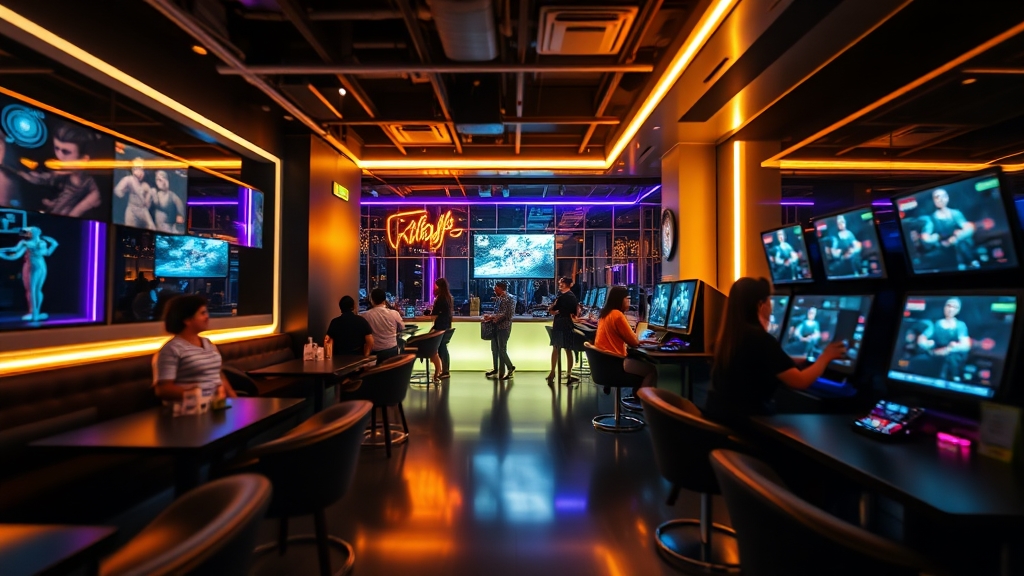
- Community Building: Experiential franchises often serve as modern-day community hubs. Think of a fitness studio that fosters a tight-knit "squad" through team challenges, a gaming cafe that hosts tournaments, or a bookstore that doubles as a venue for local poetry readings. They create a sense of belonging that turns customers into loyal members of a tribe.
- Authentic Connection: This is perhaps the most crucial element in the Philippines. The model thrives on genuine human interaction. Staff are not just service providers; they are storytellers, guides, and hosts. This approach deeply resonates with Filipino cultural values like pakikipagkapwa (a sense of shared identity) and malasakit (compassion), creating relationships that feel personal rather than commercial. To succeed, it is paramount to evaluate the brand's reputation for fostering these genuine connections.
The Forces Driving the Experiential Wave
This resurgence of experience-driven commerce isn't accidental. It's fueled by a confluence of social, technological, and economic factors unique to the modern Philippine landscape.
First, the post-pandemic "experience economy" is in full swing. After years of isolation, Filipinos are placing a higher premium on activities that create lasting memories and offer opportunities for social connection. Spending has shifted from accumulating things to accumulating experiences, and franchises are adapting to capture this new market.
Second, the power of social media cannot be overstated. An "Instagram-worthy" moment is no longer a vanity metric; it is a powerful, organic marketing engine. Experiential franchises are designed to be shared. A unique interior, a beautifully plated dessert, or a fun activity provides the perfect fodder for user-generated content, which carries far more credibility and reach than traditional advertising. This digital word-of-mouth is a massive advantage in a country where social media heavily influences purchasing decisions.
Finally, franchisors themselves are recognizing the strategic imperative. With a business model that relies on ongoing royalty fees, a franchisor’s success is intrinsically tied to the profitability of their franchisees. In a crowded market, the most defensible competitive advantage is an experience that cannot be easily copied or outsourced. This requires a much deeper level of engagement from the franchisor, moving beyond simple operational checklists to providing sophisticated training and systems. The quality of a strong franchisee support system is now a key differentiator, as it determines whether a brand can consistently deliver its promised experience across all locations.
The Future Takes Shape: Investment, Operations, and Challenges
Embracing the experiential model has profound implications for franchise investment and operations. The initial capital outlay is often significantly higher than for traditional concepts. Creating immersive environments, integrating technology, and developing proprietary programs requires a greater upfront investment. However, this premium is often justified by the potential for higher profit margins.
Experiential businesses can command premium pricing and unlock diversified revenue streams. A yoga studio can sell merchandise and host paid wellness retreats. A craft cafe can charge for workshops and rent out its space for private events. This financial model moves beyond relying solely on the core product. For any prospective investor, a thorough understanding of all franchise costs, both initial and ongoing, is crucial to accurately project profitability.
However, the path is not without its challenges. The biggest hurdle is scalability with authenticity. How do you replicate a unique, intimate experience across 10, 50, or 100 locations without it feeling contrived or diluted? The answer lies in intensive staff training and empowerment. Employees must be hired for their emotional intelligence and trained as brand ambassadors capable of adapting the experience to individual customers.
Furthermore, the legal and regulatory landscape is also adapting. As franchises become more complex, incorporating digital services, data collection, and new corporate structures, staying abreast of regulatory shifts is vital. Recent changes in Philippine law, from corporate tax reforms to new rules on digital services, can significantly impact profitability and compliance. Navigating the evolving Philippine law is a critical component of long-term strategic planning for any modern franchise.
Conclusion: Your Enterprise as a Destination
The rise of experiential franchising marks a point of no return for the Philippine market. It signals a permanent shift in consumer values, where the "how" of a business transaction has become just as important, if not more so, than the "what." This is not the death of retail, but its rebirth as a more creative, engaging, and human-centric endeavor.
For aspiring Filipino franchisees, the call to action is to fundamentally change your evaluation criteria. Look beyond the balance sheets and the product catalogs. Ask yourself: What world is this brand inviting its customers into? Is it a world people will want to visit, linger in, and tell their friends about? Is the franchisor equipped to help you build and maintain that world, day in and day out?
Choosing a franchise is no longer about buying a business in a box; it’s about becoming the steward of an experience. The most successful entrepreneurs of the next decade will be those who understand this shift and build their enterprises not just as points of sale, but as destinations. Your success hinges on your ability to craft a robust franchise business plan that puts the customer experience at its very core, ensuring your business doesn't just survive the future, but defines it.
