
The Ethics of Encroachment: When a Franchisor Opens a New Store Near You
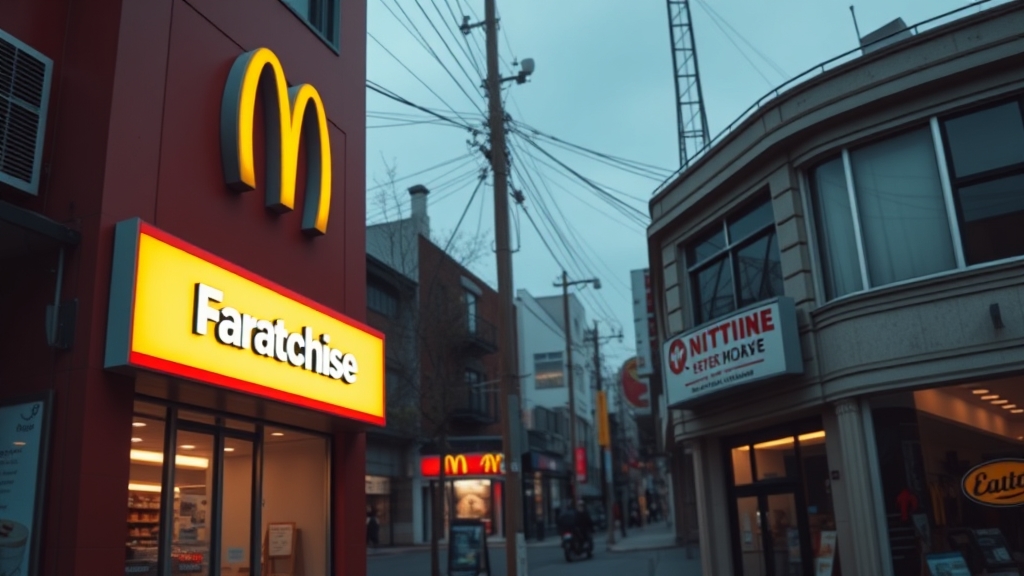
It’s one of the most gut-wrenching moments a franchisee can experience. You’ve poured your life savings, countless hours, and immense passion into building your business. You’ve cultivated a loyal customer base, your staff knows regulars by name, and your location has finally become a fixture in the local community. Then, the news arrives—not from a competitor, but from your own partner. Your franchisor is opening another brand-new outlet just a few blocks away. Suddenly, the partner you trusted to support your growth feels like your biggest threat.
This scenario, known as encroachment, is one of the oldest and most contentious issues in franchising. For years, it was a problem often managed by simple geographic distance. But in the hyper-competitive and increasingly dense Philippine market, encroachment is making a fierce comeback, and it's wearing new digital disguises. Territorial disputes now account for a significant portion of all franchise-related conflicts, a figure that has been rising steadily. This isn't just about a new store on the next corner anymore; it's about delivery apps, online sales, and non-traditional outlets that can siphon customers from a territory you thought was yours. It’s a conflict that pits a franchisor's national growth strategy against a franchisee's local survival, raising a critical question: Just because a franchisor can expand, does that mean they should?
What is Encroachment, Really? A Modern Definition
In its classic form, encroachment is straightforward: the franchisor or another franchisee opens a competing unit of the same brand within a franchisee's market area, potentially cannibalizing their sales. The concept is borrowed from property law, where it describes a structure unlawfully extending onto a neighbor's land. In franchising, it’s about a franchisor unlawfully—or unethically—intruding upon a franchisee’s business territory.
However, the 21st-century marketplace has made this definition far more complex. Encroachment today can take many forms:
- Geographic Encroachment: The traditional and most obvious form, where a new physical store opens in close proximity.
- Alternative Venue Sales: The franchisor places a kiosk, a mobile cart, or a scaled-down version of the brand in a nearby university, hospital, airport, or inside a supermarket, which were not part of the original location plan.
- Digital Encroachment: The franchisor sells products directly to consumers through its national website or e-commerce platform, shipping into your territory.
- Third-Party Delivery: A customer within your designated delivery zone places an order through an app like GrabFood or FoodPanda, but the order is fulfilled by a different, slightly more distant branch that happened to be the app’s default choice.
This evolution is at the heart of the issue's resurgence. While a franchisee may have been promised a specific area, the modern business landscape has created backdoors into that territory that many franchise agreements, written years ago, never anticipated.
The Philippine Legal Gray Area
Unlike countries with robust, franchise-specific legislation, the Philippines operates in a legal gray zone. There is no single "Franchise Law" that dictates fair practices regarding territory protection. Instead, franchising is governed by a patchwork of existing laws, primarily the Civil Code (which governs contracts) and the Intellectual Property Code (which protects the licensed brand).
This reality places enormous power in one document: the franchise agreement. The contract is king, and whatever it says about territory is what ultimately holds up in a dispute. If the agreement is silent on territorial rights, or if it contains language that explicitly reserves the franchisor's right to expand through any channel and at their sole discretion, the franchisee has very little legal recourse. This makes a deep, critical reading of the key sections of your franchise agreement not just a recommendation, but an act of business survival.
Your Territory: "Protected" vs. "Exclusive"
The franchise agreement is where the battle over encroachment is won or lost, and it often comes down to the definition of your territory. Franchisees must understand the crucial difference between two often-confused terms:
- Exclusive Territory: This is the highest level of protection. An exclusive territory means the franchisor contractually promises not to establish another franchised or company-owned outlet within your defined geographic area. They also typically cannot sell products through any other channel within that zone. This is the gold standard, but it is becoming increasingly rare.
- Protected Territory: This is more common and more nuanced. A franchisor might grant you a "protected" territory, meaning they will not open another physical store within, say, a 2-kilometer radius. However, the agreement might have a long list of "reserved rights" that allow them to sell through their website, in supermarkets, or via delivery apps that serve customers within your protected zone.
Many franchisees hear the word "protected" and assume it means "exclusive," only to discover the loopholes when it's too late. Understanding the precise rights and limitations associated with a protected franchise territory is arguably one of the most important parts of the due diligence process.
The Ethical Dilemma: Legal Rights vs. Moral Responsibility
Here lies the core of the conflict. A franchisor might have the undisputed legal right to open a new location 500 meters from your store because the contract allows it. But is it ethical?
Franchising is marketed as a partnership. The franchisor provides the system and brand, while the franchisee provides the capital and local operational expertise. The relationship is supposed to be mutually beneficial. When a franchisor makes a decision that directly harms the profitability of its existing franchisee for its own gain, it breaks this covenant of trust. In the Philippine business context, which is heavily reliant on relationships and pakikipagkapwa (a sense of shared identity), such a move is not just a cold business calculation; it's a betrayal.
Responsible franchisors understand this. They recognize that the long-term health of their brand depends on the success and satisfaction of their franchisees. Systems with strong ethical practices and a reputation for fairness attract better franchisee candidates and have significantly higher retention rates. The most ethical considerations in franchising involve balancing the company's growth ambitions with the financial viability of its existing partners. A franchisor who saturates a market might see a short-term boost in system-wide sales and royalty fees, but they are creating a network of struggling, resentful franchisees that will eventually damage the brand's reputation for everyone.
What to Do When Encroachment Looms
If you find yourself facing an encroachment situation, your response needs to be strategic, not emotional.
1. Do Not Panic or Retaliate
Your first instinct might be to publicly shame the franchisor or withhold royalty payments in protest. Both are terrible ideas. Publicly disparaging the brand can violate your franchise agreement and harm your own business. Withholding royalties creates a clear monetary default, which gives the franchisor a simple, undeniable reason to terminate your contract, effectively ending any leverage you might have had.
2. Scrutinize Your Franchise Agreement
Before you do anything else, you and your legal counsel need to review every word of your franchise agreement related to territory, exclusivity, and the franchisor's reserved rights. What does the contract actually say? Is there a clear violation, or did you misunderstand the terms? This is the foundation of your entire position.
3. Open a Dialogue
Communicate with your franchisor professionally. Frame your concerns with data. Show them your sales figures, your customer traffic data, and a projection of how the new location will impact your store's viability. Sometimes, franchisors—especially large ones—make expansion decisions from a map in a boardroom, unaware of the ground-level realities. You might be able to propose an alternative location or even make a case to be the one to operate the new unit yourself.
4. Explore Mediation or Legal Action
If dialogue fails and you have a strong contractual case, it may be time to consider formal dispute resolution. The franchise agreement will specify the required process, which often involves mediation or arbitration before litigation. Navigating these legal disputes can be complex and costly, so this step should be taken with careful legal guidance.
5. Rally with Other Franchisees
If the franchisor's encroachment is part of a system-wide pattern, you may have more power by approaching them as a group through your Franchise Advisory Council or an independent franchisee association. A collective voice raising the same concern is much harder to ignore than a single complaint. This is a key reason why it is so important to build strong franchisee-to-franchisee relationships.
Encroachment is a painful and complex issue that exposes the inherent power imbalance in many franchise relationships. While the law in the Philippines may give franchisors significant leeway, the unwritten rules of ethics and good partnership demand a higher standard. For prospective franchisees, the threat of encroachment underscores the absolute necessity of rigorous due diligence and expert legal review. For existing franchisees, it’s a harsh reminder that in franchising, your greatest partner can sometimes become your closest competitor. Your best defense is a clear understanding of your contract, a professional approach to conflict, and the courage to advocate for the fairness you were promised.
