
The Critical Path Method: Mapping Your Franchise Opening Timeline
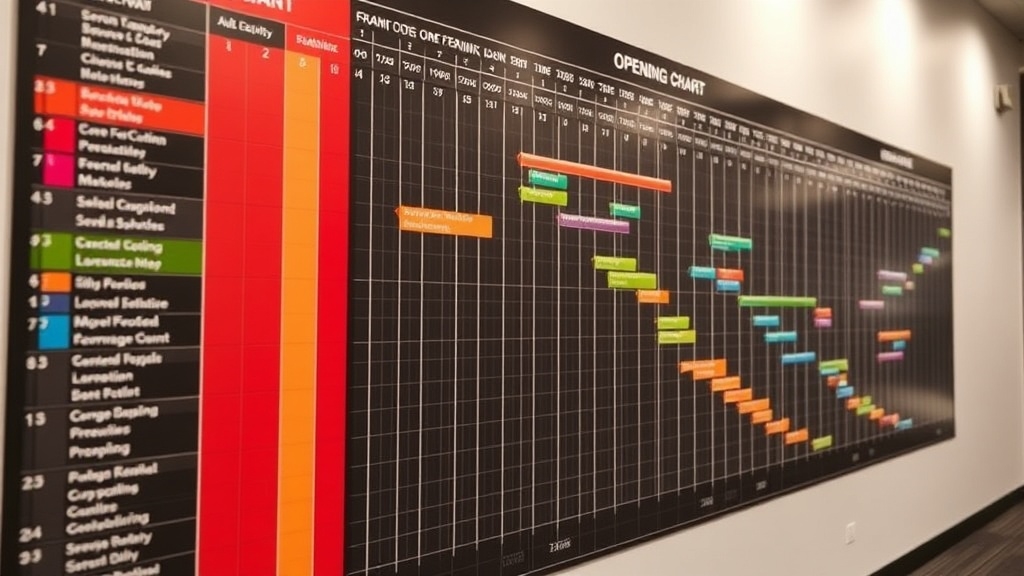
The chrome of a Jollibee kitchen, the pristine uniformity of 7-Eleven shelves, the precise choreography of a newly opened Subway counter—these aren't accidents of entrepreneurial enthusiasm. They're the product of meticulous planning, where every fixture placement, staff training hour, and permit application follows a calculated sequence. Yet for all their success, the Philippine franchise industry has witnessed a troubling pattern: 68% of new franchise openings experience delays that push back their launch dates by an average of 2.3 months, bleeding precious working capital and momentum.
The resurgence of systematic project management in franchising tells a different story. After years of treating franchise openings as loosely coordinated events, savvy franchisees are embracing the Critical Path Method—a military-grade scheduling technique that transforms the chaotic maze of opening requirements into a precisely orchestrated timeline. The results speak volumes: franchisees employing CPM complete their openings an average of 43 days faster than those relying on traditional approaches, while reducing cost overruns by nearly 30%.
This analytical approach to franchise timing isn't just about efficiency—it's about survival in an increasingly competitive market where delayed openings can spell the difference between capturing crucial holiday seasons and missing them entirely.
Deconstructing the Franchise Opening Timeline
The Critical Path Method, originally developed by DuPont and Remington Rand in the 1950s, identifies the longest sequence of dependent activities in any project—the "critical path" that determines your minimum completion time. In franchise terms, this means mapping every single requirement from signed agreement to grand opening, then identifying which delays will actually push back your launch date.
A typical franchise opening involves 80 to 120 distinct activities, ranging from obvious milestones like site selection and staff training to hidden requirements like securing fire department approvals and coordinating utility connections. The genius of CPM lies in distinguishing between activities that can run parallel and those that must occur sequentially.
Consider the opening timeline for a food service franchise in Metro Manila. While your architect designs the layout (a 3-week process), you can simultaneously pursue business permits from the Department of Trade and Industry and coordinate with your chosen location's mall management. However, you cannot begin equipment installation until electrical work is completed, and you cannot conduct staff training until your Point-of-Sale system is operational.
Critical vs. Non-Critical Activities
The mathematical precision of CPM reveals which activities have "float time"—buffer periods where delays won't impact your overall schedule—and which exist on the critical path where any delay immediately pushes back your opening. Understanding the importance of training support becomes crucial when mapping these dependencies, as comprehensive training programs often span multiple critical path activities.
In Philippine franchise operations, common critical path activities include:
- Securing final location approval from franchisors (typically 2-3 weeks)
- Completing Bureau of Fire Protection inspections (1-2 weeks, with potential delays)
- Installing and testing specialized equipment (varies by franchise type)
- Conducting mandatory staff training programs (usually 10-15 days)
- Obtaining final business permits and health certificates
Meanwhile, activities with significant float include marketing material preparation, supplier relationship building, and community outreach planning—all valuable but not directly blocking your opening timeline.
Building Your Franchise CPM Network
Creating an effective CPM timeline begins with exhaustive activity identification. The Philippine franchise environment adds unique complexities that generic project management templates can't capture. Local government units operate with varying efficiency levels, national agencies have specific documentation requirements, and cultural factors influence everything from contractor reliability to staff availability.
Phase One: Pre-Construction Critical Path
The initial critical path typically runs from franchise agreement signing through construction commencement. This phase averages 60-90 days for most franchises but can extend significantly based on location complexity and franchisor requirements.
Essential activities include final site approval from franchisors, lease negotiation and execution, architectural plan approval, and permit acquisition from multiple government levels. Site selection and location strategy significantly impacts this phase's duration, particularly for franchises requiring specialized locations or extensive modifications.
The interconnected nature of these activities creates potential bottlenecks. DTI business registration cannot proceed without confirmed lease agreements, while building permits require approved architectural plans that depend on final site specifications. Smart franchisees initiate multiple parallel tracks while understanding these dependencies.
Phase Two: Construction and Equipment Critical Path
Construction phases typically represent the longest single sequence in franchise opening timelines, averaging 90-150 days depending on concept complexity. Food service franchises requiring specialized ventilation, grease traps, and commercial kitchen equipment consistently experience longer timelines than retail concepts.
Critical activities during this phase include structural modifications, electrical and plumbing rough-in, equipment delivery and installation, and progressive inspections by various agencies. Equipment procurement often extends across multiple critical path segments, particularly for franchises requiring imported machinery or specialized fixtures.
The sequencing becomes crucial here: HVAC installation must precede ceiling work, which must precede lighting installation, which must precede final flooring. Delays in any critical path activity cascade through subsequent milestones, making buffer time estimation essential.
Phase Three: Operations Launch Critical Path
The final critical path segment encompasses staff recruitment, training, system testing, and regulatory compliance. Analyzing support systems proves vital during this phase, as franchisor-provided training programs often determine the minimum duration for this segment.
This phase typically requires 30-45 days but varies significantly based on concept complexity and staff availability. Fine-dining franchises requiring extensive service training extend this timeline, while quick-service concepts with standardized operations can compress it considerably.
Technology Tools for Philippine Franchisees
Modern CPM implementation benefits tremendously from digital project management platforms, though selection must account for Philippine business environments and internet infrastructure. Cloud-based solutions offer collaboration advantages essential for coordinating between franchisors, contractors, and regulatory agencies.
Microsoft Project remains the gold standard for comprehensive CPM analysis, offering sophisticated dependency mapping and resource allocation features. However, its complexity often overwhelms smaller franchisees. Alternative platforms like Monday.com, Asana, and Smartsheet provide user-friendly interfaces while maintaining essential CPM functionality.
Local considerations influence platform selection significantly. Offline capability becomes crucial given occasional connectivity issues, while mobile accessibility supports field coordination with contractors and suppliers. Integration with Filipino banking systems and accounting software streamlines financial tracking throughout the opening process.
Customizing Templates for Philippine Operations
Generic CPM templates require extensive customization for Philippine franchise operations. Local regulatory requirements, cultural work patterns, and infrastructure realities demand franchise-specific modifications. Negotiating commercial lease agreements involves unique timeline considerations that standard templates can't anticipate.
Successful franchisees develop master templates incorporating typical Philippine processing times for common activities. DTI registration averages 3-5 business days, SEC incorporation requires 7-15 days, while BIR TIN acquisition typically completes within 5-7 days. Building these baselines enables realistic timeline development while identifying potential acceleration opportunities.
Weather pattern integration becomes essential for construction-heavy phases. Monsoon seasons predictably impact outdoor work, equipment deliveries, and inspection schedules. Smart CPM planning accounts for these cyclical patterns, scheduling weather-dependent activities during optimal periods.
Resource Allocation and Budget Integration
CPM excellence extends beyond scheduling into comprehensive resource management. Franchise openings involve coordinating human resources, financial flows, and material supplies across extended timelines. Poor resource allocation often creates artificial delays even when critical path scheduling is perfect.
Financial Flow Optimization
Traditional franchise budgets focus on total investment requirements without considering cash flow timing. CPM-based budgeting maps financial needs against activity schedules, optimizing working capital utilization and identifying funding requirement peaks.
Early franchise phases typically require 30-40% of total investment for site securing, initial permits, and architectural work. Construction phases consume 40-50% of budgets, while final preparation and launch activities account for the remaining 10-20%. Understanding these patterns enables better financing arrangements and cash flow management.
Smart franchisees negotiate payment terms that align with CPM schedules. Equipment suppliers offering installment payments can ease cash flow constraints, while contractor agreements with milestone-based payments protect against delays. Working capital needs planning becomes significantly more precise when integrated with detailed CPM timelines.
Human Resource Coordination
Staff recruitment and training represent both critical path activities and resource allocation challenges. The Philippine labor market's characteristics—including notice period requirements, training preferences, and cultural onboarding expectations—influence both timing and resource requirements.
Successful franchisees begin recruitment 45-60 days before projected opening, allowing time for proper candidate screening, reference checking, and scheduling flexibility. Training programs must align precisely with operational readiness, as premature training creates retention risks while delayed training pushes back opening dates.
Management hiring requires particular attention to CPM integration. Store managers need sufficient lead time to participate in construction oversight, supplier coordination, and staff recruitment. Their early involvement often accelerates subsequent critical path activities while building ownership mindset essential for long-term success.
Managing Philippine-Specific Challenges
The Philippine business environment presents unique CPM challenges that international franchise systems don't always anticipate. Regulatory complexity, infrastructure limitations, and cultural factors create potential disruptions that systematic planning can largely mitigate.
Regulatory Navigation
Multi-level government requirements create complex dependency chains often invisible to traditional project planning. Barangay clearances prerequisite business permits, which prerequisite BIR registration, which enables bank account opening required for equipment purchases. Understanding these sequences prevents costly delays and restart scenarios.
Local government unit variations add another complexity layer. Manila City permits process differently than Quezon City requirements, while provincial locations operate under entirely different timelines and procedures. Experienced franchisees develop location-specific CPM modifications accounting for these variations.
The Department of Health, Bureau of Fire Protection, and Environmental Management Bureau each maintain distinct inspection schedules and requirements. Business permits and licenses coordination becomes a critical path activity requiring careful scheduling and follow-up.
Infrastructure Dependencies
Utility connections often create unexpected critical path extensions, particularly in developing areas or newly constructed buildings. Power company scheduling, internet service provider installation, and water connection activation operate on independent timelines requiring early coordination.
Equipment delivery logistics present another infrastructure challenge. Imported machinery faces customs clearance delays, while domestic suppliers struggle with traffic congestion and warehouse limitations. Smart CPM planning includes buffer time for these realities while exploring acceleration options like expedited shipping or alternative suppliers.
The road infrastructure limitations affect construction material delivery, staff commuting, and customer accessibility. Traffic area and low-cost locations analysis must integrate with CPM timing to ensure realistic accessibility projections.
The transformation of franchise opening from chaotic scramble to orchestrated precision reflects broader trends toward professionalization in Philippine business operations. As competition intensifies and margins compress, the luxury of inefficient openings disappears. The Critical Path Method offers franchise owners a battle-tested framework for navigating the complex journey from signed agreement to successful launch.
The mathematics are compelling: franchisees employing systematic CPM approaches consistently outperform their peers in opening speed, budget adherence, and early operational stability. Yet the true value extends beyond mere efficiency gains. The discipline required for effective CPM planning cultivates the systematic thinking essential for long-term franchise success.
For Filipino entrepreneurs ready to embrace data-driven franchise development, the Critical Path Method represents more than a scheduling tool—it's a competitive advantage that transforms uncertainty into strategic precision. In a market where timing often determines success, this analytical approach to franchise openings has evolved from optional sophistication to essential survival skill.
