
A Deep Dive into Franchise Training: On-Site vs. Classroom vs. Online
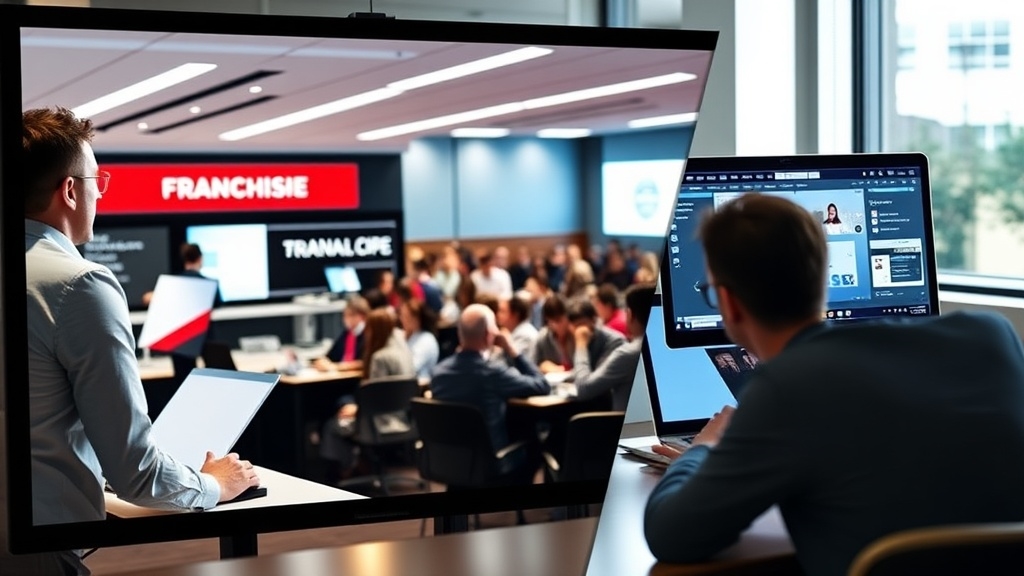
The conventional wisdom once held that franchise training was a one-size-fits-all affair—new franchisees packed into corporate headquarters for a week of classroom sessions before heading home to struggle through their opening months. But that narrative has undergone a dramatic transformation in recent years, with a whopping 73% of franchisors now deploying hybrid training models that combine multiple delivery methods to maximize learning outcomes and operational success.
This shift represents more than just technological adaptation; it reflects a fundamental reimagining of how knowledge transfer works in the franchise ecosystem. The Philippine franchise industry, in particular, has emerged as a testing ground for innovative training approaches that address the unique challenges of archipelagic business operations, diverse learning preferences, and the practical realities of running a franchise in a developing market economy.
The Training Evolution: From Single Method to Blended Mastery
The franchise training landscape has witnessed a remarkable comeback from rigid, monolithic approaches to sophisticated, multi-modal programs that recognize different learning styles and operational realities. Industry data reveals that franchisors utilizing blended training approaches see 40% higher franchisee success rates in their first year compared to those relying on single-method training delivery.
This evolution stems from hard-learned lessons during the pandemic years, when traditional classroom-heavy programs collapsed overnight, forcing franchisors to rapidly adapt or watch their expansion plans crumble. The survivors didn't just migrate online—they discovered that combining on-site, classroom, and digital elements creates more resilient, effective training ecosystems that serve franchisees better than any single approach ever could.
Philippine franchisors have proven particularly innovative in this space, driven by geographic necessities that make purely centralized training models economically prohibitive for many brands. When understanding franchise operations, successful franchisors recognize that training delivery must match the operational complexity of their business model and the learning preferences of their franchise partners.
On-Site Training: The Immersive Reality Check
On-site training delivers the closest approximation to real-world operational conditions, providing franchisees with hands-on experience using actual equipment, systems, and procedures they'll encounter daily. This method proves particularly valuable for food service, retail, and technical service franchises where equipment operation, customer interaction protocols, and quality control procedures require physical demonstration and practice.
The immersive nature of on-site training creates immediate context for theoretical knowledge, allowing franchisees to understand not just what to do but why specific procedures matter for customer satisfaction and operational efficiency. When franchisees practice using POS systems, preparation equipment, or service protocols in realistic environments, they develop muscle memory and confidence that classroom discussions simply cannot replicate.
However, on-site training presents significant logistical and financial challenges for Philippine franchisors operating across multiple islands and urban centers. Travel costs, accommodation expenses, and facility availability can make extensive on-site programs prohibitively expensive for smaller franchise systems. Additionally, the time required for comprehensive on-site training often conflicts with franchisees' desire to begin revenue generation quickly.
The most effective on-site programs focus on specific operational elements that genuinely require hands-on practice rather than attempting to cover all training topics in this format. Successful franchisors identify the 20% of operations that drive 80% of customer experience outcomes and concentrate their on-site training efforts on mastering these critical elements.
Classroom Training: The Collaborative Foundation
Classroom-based training creates structured environments where franchisees engage in interactive learning through real-time discussions, case study analysis, and peer networking that proves invaluable for long-term system success. The collaborative nature of classroom sessions enables experienced franchisees to share insights with newcomers while creating relationships that extend far beyond initial training periods.
The Philippine Franchise Association recognizes the enduring value of classroom training through its structured educational programs that bring franchise stakeholders together for intensive learning sessions. These programs demonstrate how classroom environments excel at covering complex business topics like financial management, marketing strategy, and regulatory compliance that benefit from detailed explanation and group discussion.
Classroom training provides immediate feedback opportunities that online modules cannot match, allowing trainers to address confusion in real-time and adapt content delivery based on participant understanding. The social learning aspects of classroom environments also prove crucial for building franchise system culture and ensuring consistent interpretation of brand standards across different operators.
Nevertheless, classroom training faces scalability challenges in the Philippine context, where geographic dispersion makes centralized programs expensive and logistically complex. The fixed scheduling requirements of classroom sessions often conflict with franchisees' existing business obligations, while the one-size-fits-all pace may frustrate experienced businesspeople while overwhelming industry newcomers.
Modern classroom training programs increasingly incorporate technology elements like interactive presentations, simulation software, and real-time polling to enhance engagement while maintaining the collaborative benefits that make in-person sessions valuable. When developing strong franchise relationships, the networking opportunities inherent in classroom training often prove as valuable as the formal curriculum content.
Online Training: The Scalable Solution
Digital training platforms have transformed from emergency pandemic solutions into sophisticated learning management systems that offer unprecedented flexibility, scalability, and cost-effectiveness for franchise education. Online training enables franchisees to progress at their own pace, review complex material multiple times, and access training content from any location with internet connectivity.
The Philippine market has embraced online training particularly enthusiastically, driven by the practical realities of inter-island business operations and the growing digital literacy of the franchise community. Learning management systems now support multimedia content, interactive assessments, and progress tracking that rivals traditional classroom experiences while eliminating geographic and scheduling barriers.
Online training excels at delivering standardized content consistently across all franchise locations, ensuring that every franchisee receives identical information about procedures, policies, and brand standards. This consistency proves particularly valuable for maintaining quality control and operational uniformity across geographically dispersed franchise networks.
However, online training struggles with engagement challenges that can lead to superficial learning if not carefully designed and implemented. The lack of immediate human interaction means questions may go unanswered for extended periods, while the self-directed nature of online learning can result in incomplete training for franchisees who lack strong self-discipline or time management skills.
The most successful online training programs incorporate interactive elements, regular check-ins, and achievement milestones that maintain engagement while providing flexibility. Successful franchisors also recognize that online training works best for information transfer and conceptual understanding, while practical skills development often requires supplemental hands-on components.
The Blended Approach: Maximizing Strengths, Minimizing Weaknesses
Progressive franchisors increasingly deploy blended training models that strategically combine online, classroom, and on-site elements to maximize learning effectiveness while managing costs and logistical challenges. These programs typically begin with online modules that establish foundational knowledge, progress to classroom sessions for collaborative learning and relationship building, and conclude with on-site training for hands-on skill development.
The sequential nature of blended programs allows each training method to build upon previous learning while addressing different aspects of franchise operations. Online modules can efficiently cover regulatory requirements, brand history, and standard operating procedures, while classroom sessions focus on business strategy, problem-solving, and peer learning, and on-site training concentrates on equipment operation and customer service execution.
Blended approaches also accommodate different learning preferences within the same training program, ensuring that visual learners, auditory learners, and kinesthetic learners all receive content in formats that maximize their comprehension and retention. This inclusivity proves particularly important in the Philippine market, where franchisees come from diverse educational and professional backgrounds.
The flexibility of blended training enables franchisors to customize programs based on franchisee experience levels, business concepts, and operational complexity. New-to-business franchisees might require extensive classroom and on-site components, while experienced operators could focus primarily on brand-specific online training with minimal in-person requirements.
Regulatory and Compliance Considerations
Philippine franchise training programs must navigate a complex regulatory environment that influences training content, delivery methods, and documentation requirements. The Department of Trade and Industry expects franchisors to provide adequate training that enables franchisees to comply with local business regulations, while industry-specific agencies like the Food and Drug Administration impose additional training requirements for food service operations.
Labor law compliance represents a critical training component for all franchise operations, as franchisees must understand their obligations under the Labor Code regarding employee rights, benefits, and working conditions. Understanding Philippine employment laws becomes essential for ensuring that franchise training adequately prepares operators for legal compliance while avoiding costly violations.
The documentation requirements for franchise training can influence delivery method selection, as certain regulatory bodies prefer specific types of training verification or completion certificates. Online training platforms often provide superior tracking and documentation capabilities compared to traditional classroom or on-site programs, making compliance verification more straightforward.
Intellectual property protection also affects training program design, as franchisors must balance comprehensive education with confidentiality requirements. Online platforms can provide better control over content access and sharing compared to printed materials or classroom discussions, while on-site training enables direct supervision of sensitive operational procedures.
Measuring Training Effectiveness Across Delivery Methods
The effectiveness of different training delivery methods requires sophisticated measurement approaches that go beyond simple completion rates or satisfaction surveys. Successful franchisors track operational metrics like customer satisfaction scores, financial performance, and compliance audit results to determine which training approaches produce superior real-world outcomes.
Online training platforms provide detailed analytics about engagement, completion rates, and assessment performance that enable franchisors to identify content areas requiring improvement or additional support. However, these metrics may not correlate perfectly with operational success, as digital engagement doesn't guarantee practical application of learned concepts.
Classroom training effectiveness can be measured through immediate feedback, peer evaluations, and post-training assessments, but the collaborative nature of these sessions makes individual performance attribution challenging. The networking and relationship-building aspects of classroom training often produce long-term benefits that become apparent only months or years after initial training completion.
On-site training effectiveness typically becomes evident quickly through operational performance observation, equipment proficiency demonstrations, and customer service quality assessments. However, the intensive nature of on-site training makes it difficult to separate training quality from individual aptitude or motivation factors.
Cost-Benefit Analysis: Balancing Investment and Outcomes
The financial implications of different training delivery methods vary dramatically based on franchise system size, geographic distribution, and operational complexity. Online training typically offers the lowest per-franchisee cost once initial development expenses are amortized, while classroom training involves ongoing facility, instructor, and material costs that increase with program frequency.
On-site training often represents the highest per-franchisee investment due to travel costs, facility requirements, and intensive instructor time commitments. However, the reduced learning curve and faster operational proficiency achieved through hands-on training can offset these costs through earlier revenue generation and reduced operational errors.
The total cost of training failure—including operational mistakes, customer dissatisfaction, and potential franchise termination—often exceeds the incremental investment required for comprehensive, multi-modal training programs. When evaluating franchise training programs, successful franchisors consider not just delivery costs but the long-term financial impact of training quality on system performance.
Philippine franchisors operating across multiple regions face additional cost considerations related to trainer travel, local facility rental, and program scheduling complexity. Blended training approaches often provide the optimal cost-effectiveness balance by concentrating expensive in-person components on the most critical operational elements while using digital delivery for standardized content.
The training methodology renaissance sweeping through Philippine franchising represents more than just technological adaptation—it reflects a fundamental shift toward recognizing that successful franchise operations require sophisticated, multi-faceted educational approaches that match the complexity of modern business operations. The franchisors who master this evolution don't just train franchisees; they create comprehensive learning ecosystems that support continuous improvement, operational excellence, and sustainable business growth.
The comeback story isn't about choosing between on-site, classroom, or online training—it's about orchestrating these methods strategically to create training experiences that prepare franchisees for real-world success while building stronger, more resilient franchise systems. In the Philippine market, where geographic challenges meet diverse learning needs, this strategic approach to training delivery has become the difference between franchise systems that thrive and those that merely survive.
