
How Franchisors Handle Bankruptcies Within Their Franchisee Network
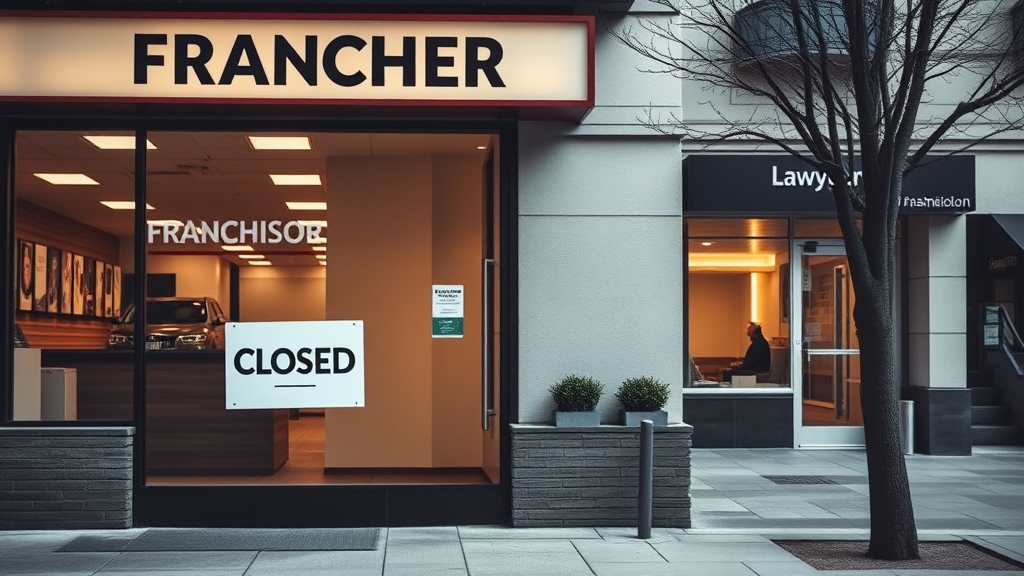
In the grand narrative of Philippine franchising, franchisee failure has long been the ghost at the banquet—an uncomfortable truth whispered about but rarely dissected in public. For decades, the prevailing response from franchisors to a franchisee on the brink of collapse was swift and surgical: terminate the agreement, reclaim the territory, and replace the failing unit as quickly as possible. This approach, rooted in a rigid interpretation of contracts, treated a bankrupt franchisee less like a partner in distress and more like a diseased limb to be amputated before it infected the entire system. But a new, more pragmatic philosophy is quietly taking hold.
Faced with a volatile economy and the hard-learned lesson that a public trail of shuttered stores damages a brand more than a single struggling operator, savvy franchisors are rewriting their playbooks. The old model of cut-and-run is being replaced by a sophisticated system of corporate triage. Instead of immediate termination, the new trend leans toward early intervention, structured support, and, where possible, facilitated exits that preserve the value of the location and the integrity of the brand. This isn't an act of charity; it's a calculated, strategic evolution recognizing that in the interconnected ecosystem of a franchise network, one franchisee's bankruptcy is a system-wide problem that demands a system-wide solution.
The First Tremors: From Default to Distress
A franchisee doesn't arrive at bankruptcy overnight. The journey is a slow burn, marked by a series of escalating financial tremors that a vigilant franchisor can—and should—detect. The first sign is almost always a disruption in the financial lifeline of the network: royalty payments. A missed or delayed royalty payment is the canary in the coal mine.
In the past, this would trigger an immediate, formal default notice, starting a countdown clock to termination. The modern approach, however, treats it as a diagnostic trigger. Instead of a legal letter, the first response might be a call from a franchise business consultant. Their goal is no longer just to collect the debt but to understand the "why." Is it a cash flow issue caused by a sudden spike in local costs? Are sales dipping due to a new competitor? Or is it a symptom of deeper operational mismanagement?
This proactive engagement is crucial. Franchisors are learning that the cost of deploying a support team to help a franchisee troubleshoot their P&L statement, renegotiate with local suppliers, or devise a targeted marketing blitz is often a fraction of the cost associated with a failed unit. These costs include not only lost royalties but also the potential for litigation, the expense of finding and training a replacement, and the unquantifiable damage to brand reputation when a storefront is boarded up. This shift acknowledges a fundamental truth about franchising: sometimes the problem isn't a bad franchisee, but a good franchisee in a bad situation where the franchisor's support has been insufficient, a scenario where the franchisor fails to provide adequate support.
The Contractual Tripwire: Rights, Risks, and Recourse
When intervention fails and a franchisee’s financial situation deteriorates toward formal insolvency, the franchise agreement becomes the central document. Every well-drafted agreement contains clauses that define what happens in this eventuality. In the Philippines, while there isn't a single overarching "franchise law," the entire relationship is governed by contract law and the provisions of the Financial Rehabilitation and Insolvency Act (FRIA) of 2010.
Typically, the franchise agreement will list insolvency or filing for bankruptcy as a material breach, giving the franchisor the immediate right to terminate the relationship. These powerful termination clauses are the franchisor's primary legal shield, designed to protect the intellectual property (the brand, trademarks, and operating system) and prevent a bankrupt operator from dragging the brand's name through the mud.
However, exercising this right is a strategic decision, not an automatic one. A franchisor must weigh its options carefully:
- Termination: This is the cleanest but often most brutal option. The franchisor sends a formal notice, demanding the franchisee de-identify the location (remove all branding), return the operations manual, and cease using the system. This severs the relationship completely. The risk is that it can lead to a messy legal fight, especially if the franchisee feels the franchisor’s actions contributed to their failure.
- Assuming the Lease: Many franchisors secure the right to assume the franchisee's lease in the event of default. This is a critical strategic asset. It allows the franchisor to take control of a valuable location, preventing a competitor from moving in. They can then either operate it as a corporate store or resell it to a new, more stable franchisee.
- Buying the Assets: The franchisor may also have the right of first refusal to purchase the franchisee's assets (equipment, inventory) at fair market value. This can be a faster and less contentious way to transition the location than a forced liquidation.
Understanding the complex interplay between contract law and national statutes is paramount. Both franchisors and franchisees must be aware of the governing Philippine franchise laws and regulations to navigate this difficult process without incurring further damage.
The Modern Playbook: Managing the Bankruptcy Process
If a franchisee formally files for insolvency under FRIA, the dynamic shifts. A court-appointed receiver or liquidator may enter the picture, and the franchisor becomes one of many creditors. This is where the modern, hands-on approach truly diverges from the old one. Instead of seeing the franchisee as an adversary, the progressive franchisor views the situation as a salvage operation.
When a franchisee declares bankruptcy, the franchisor's primary goals are continuity and control. The last thing they want is a court-ordered piecemeal liquidation of the store's assets, which erodes brand value and creates an operational vacuum. To avoid this, they often engage in several key strategies:
- Offering Debtor-in-Possession (DIP) Financing: In a rehabilitation scenario, the franchisor might offer a loan to the struggling franchisee to keep the lights on while a restructuring plan is developed. This isn't an act of kindness; it's a strategic move that gives the franchisor significant influence over the process and a higher-priority claim on the assets.
- Facilitating a Sale: The franchisor is in the best position to find a buyer for the distressed unit. They have a pipeline of new applicants and a network of existing, successful multi-unit owners who may be looking to expand. The franchisor can act as a matchmaker, connecting the bankrupt franchisee with a qualified buyer. This allows the outgoing owner to settle their debts and exit with dignity, while the franchisor ensures a seamless transition to a proven operator.
- Temporary Royalty Abatement or Deferral: As part of a workout plan, a franchisor might agree to temporarily reduce or defer royalty payments, on the condition that the franchisee invests that cash directly into areas that can drive recovery, such as local marketing or staff training. This transforms a liability (unpaid royalties) into a targeted investment in the unit's survival.
The Endgame: Orderly Exits and Network Health
Ultimately, the goal of the modern franchisor is to manage the failure in a way that minimizes damage to the collective brand. A single bankruptcy can trigger a "contagion" effect, spooking other franchisees, worrying suppliers, and making prospective investors hesitant. Therefore, achieving an orderly exit is paramount.
The preferred outcome is almost always a sale to another franchisee. This keeps the location within the system and operating under brand standards. If a suitable franchisee buyer cannot be found, the franchisor may opt to buy the unit back and run it as a corporate-owned store, at least temporarily, to maintain brand presence in the market.
Outright closure and liquidation is the option of last resort. It represents a total loss for everyone involved: the franchisee loses their investment, the franchisor loses a royalty stream and a market presence, and the brand suffers a public failure.
This evolution reflects a deeper understanding of the franchise relationship. The old adversarial model is giving way to a more symbiotic one, where the health of the individual unit and the health of the entire network are seen as inextricably linked. For Filipino entrepreneurs considering a franchise, this trend is a positive development. It suggests that many franchisors are no longer just selling a business in a box; they are committing to a long-term partnership, one that is designed to weather economic storms and provide structured support even in the darkest of financial times. It is a fundamental shift that redefines the very nature of franchise exit strategies, moving from a focus on individual failure to one of collective resilience.
