
Social Franchising in the Philippines: Models for Impact and Profit
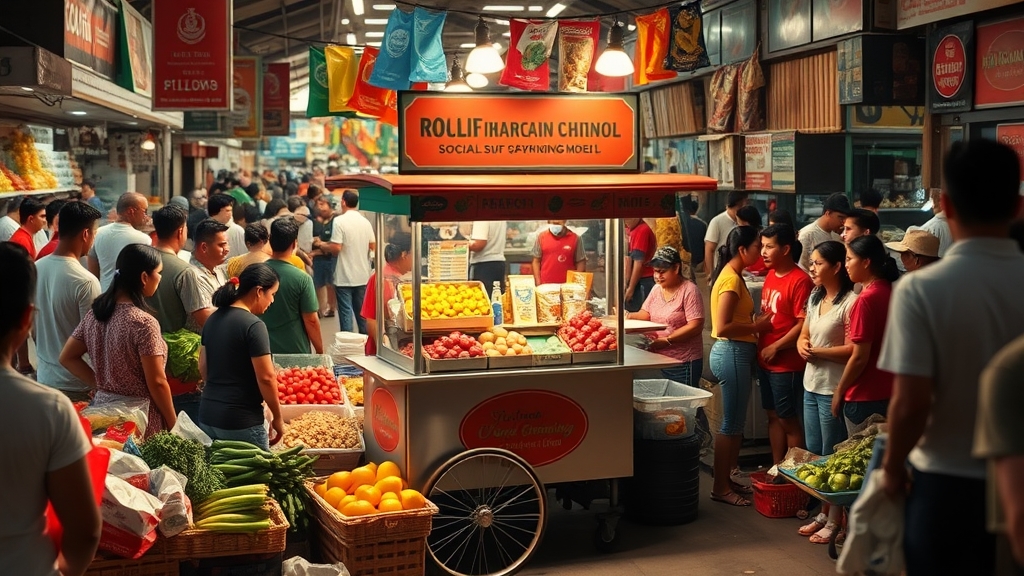
Franchising in the Philippines typically conjures images of fast-food giants and coffee chains lining city streets—a testament to a thriving, profit-driven industry. With around 1,300 franchise brands operating nationwide, the model’s power to scale businesses is undeniable. Yet, beyond the familiar landscape of retail and restaurants, a different kind of franchising is quietly taking root. It’s a model that applies the same principles of replication, brand standards, and operational support not just for financial returns, but for social transformation.
This is the world of social franchising, a hybrid approach that marries the engine of commercial franchising with the heart of a social mission. In a nation grappling with persistent social challenges—from healthcare access in remote areas to economic opportunities for marginalized communities—social franchising has emerged from a niche concept into a powerful, data-backed strategy for change. It poses a compelling question: What if the same system that standardizes a burger recipe could also standardize quality healthcare for the underserved or empower a mother to become a successful micro-entrepreneur?
This isn’t just a theoretical comeback for a softer, kinder version of capitalism. It's a pragmatic application of a proven business model to solve some of the country's most entrenched problems, creating a dual bottom line of both measurable impact and sustainable profit.
The Comeback of a Purpose-Driven Model
For years, the narrative of Philippine business has been dominated by pure-play commercial success. However, a growing consciousness around societal needs has created fertile ground for models that do more than just generate wealth. Social franchising answers this call by providing a structured, scalable "business-in-a-box" solution to social enterprises that have historically struggled with two things: scaling their impact and achieving financial sustainability.
The core idea is to replicate a successful social intervention with the same rigor as a commercial franchise. The "franchisor" is typically a non-governmental organization (NGO) or a social enterprise that has developed a proven method for delivering a social good—be it health services, education, or access to essential products. The "franchisees" are local entrepreneurs, community health workers, or small business owners who adopt this model.
This framework directly tackles critical hurdles. A 2021 report on social enterprises in the Philippines identified "unrefined business models" and "limited supply of capital" as major barriers. Social franchising provides the blueprint and often, through the franchisor, the initial support and access to resources needed to get off the ground.
Model 1: The Clinical Franchise for Healthcare Access
One of the most developed applications of social franchising globally and in the Philippines is in the healthcare sector. The model is designed to expand access to affordable, quality health services, particularly in reproductive health and maternal care, by leveraging existing private clinics and midwives.
A prime example is BlueStar Pilipinas, a clinical social franchise operated by Marie Stopes International. Instead of building new clinics from scratch, the model partners with existing, often independent, midwife-run clinics in underserved areas. These midwives become franchisees.
- The Franchisor's Role: BlueStar provides its franchisee midwives with comprehensive training on clinical standards, family planning counseling, and business management. They supply quality, affordable contraceptives and medical supplies, benefiting from bulk procurement. The clinics get to use the BlueStar branding, which signifies a standard of quality and builds patient trust.
- The Franchisee's Role: The midwife-franchisee operates her own clinic but adheres to the franchisor’s quality standards and reporting requirements. She gains access to a support system, continuous training, and a reliable supply chain, which she might lack as a solo practitioner. In its first two years of operation, this model saw rapid growth in both the number of franchises and the services provided by each, with the cost per couple year of protection (CYP) dropping to a sustainable $16 USD.
This model effectively addresses gaps in public health by creating a network of standardized private providers. It empowers local healthcare professionals—predominantly women—as entrepreneurs while significantly increasing access to critical services like family planning. Studies on healthcare franchising show these models can considerably improve client volumes, satisfaction, and the availability of essential health commodities. The clear definition of the role of franchisor and franchisee is critical to maintaining this balance of autonomy and quality control.
Model 2: The Micro-Enterprise Network for Economic Empowerment
Beyond healthcare, social franchising is being used to create sustainable livelihoods. This model focuses on empowering individuals at the base of the economic pyramid to become effective entrepreneurs by providing them with a turnkey business.
The standout Philippine example is the Hapinoy (Happy Filipino) network. Launched in 2007, Hapinoy’s mission is to uplift the lives of Filipino mothers, or nanays, by transforming their small sari-sari stores into more robust community businesses.
- The Franchisor's Role: Hapinoy acts as a social franchisor, providing nanay micro-entrepreneurs with business training, access to capital, and a new range of high-impact products and services to sell. This includes over-the-counter medicines, nutritional products, and mobile technology services that are often unavailable in their communities.
- The Franchisee's Role: The nanay store owner becomes part of the Hapinoy network. She learns financial management and inventory control, and her store becomes a hub for essential goods and services. This not only increases her income but also enhances the well-being of her entire community. By 2015, Hapinoy had already trained over 3,000 nanays, demonstrating the model's scalability.
This approach is powerful because it doesn't try to invent a new business; it improves upon an existing, culturally embedded one—the sari-sari store. It’s a perfect illustration of how franchising can be a platform for effective community engagement, turning ubiquitous neighborhood stores into access points for social good.
The Dual Bottom Line: Profitability and Impact
A common misconception is that social enterprises must be entirely non-profit. The strength of the social franchise model lies in its pursuit of financial viability. For the system to be sustainable and not perpetually reliant on donors, both the franchisee and the franchisor must generate revenue.
- For the Franchisee: The goal is a profitable business. A Hapinoy nanay earns more because she has better business skills and new product lines. A BlueStar midwife sees more patients because of the trusted brand and improved services. This financial incentive is crucial for recruitment and motivation.
- For the Franchisor: Revenue is generated through various streams, such as membership fees, margins on products sold to franchisees, or service fees. This income is reinvested into the network to cover the costs of training, quality assurance, and expansion. The aim is to eventually become self-sustaining.
However, achieving this balance is not without challenges. Research shows that while many social franchises improve access to services, they often struggle to reach the absolute poorest populations, who may still be unable to afford even subsidized fees. Competition from free public services and reliance on initial donor funding for subsidies are significant hurdles. This makes the ethical considerations of pricing and service delivery paramount to staying true to the social mission.
Why This Model is Gaining Traction
The resurgence of interest in social franchising is driven by its unique ability to blend the best of both worlds. For social organizations, it offers a path to scale that is often elusive. For entrepreneurs, it offers a chance to run a business with a deeper sense of purpose. It’s a structured way to franchise for a cause.
The success of any franchise system, social or commercial, hinges on its support structures. The immense value of the franchisor is in providing a proven system and the necessary guidance to execute it. This is why the importance of training and support is a non-negotiable element, forming the backbone of the relationship and ensuring that the brand's promise—whether for a consistent product or a consistent quality of care—is delivered at every single touchpoint.
As the Philippines continues to seek innovative solutions for inclusive growth, social franchising offers a compelling, market-based approach. It leverages the entrepreneurial spirit inherent in Filipino culture and channels it toward collective progress. The model proves that profit and purpose are not mutually exclusive; in fact, when structured correctly, they can be mutually reinforcing, creating a powerful cycle of economic empowerment and social impact that can change the nation, one franchise at a time.
